
Ask ten shooters what the “best” zero distance is, and you’ll likely get ten different answers.
Some swear by 10 yards. Others default to 25. Rifle shooters often push to 50 or 100. Each of those choices can work, but the problem is that many shooters pick a distance without fully understanding what it actually does.
Zero distance isn’t just a number. It directly affects how your shots land at distances both closer and farther than where you zeroed. If you don’t understand that relationship, you’re left guessing whenever the distance changes.
The goal isn’t to find a universal answer. It’s to understand how different zero distances behave so you can choose what makes sense for your setup.
When you zero a red dot, you’re aligning your point of aim with your point of impact at a specific distance.
That sounds straightforward, but there’s an important detail behind it.
Your optic sits above your barrel. That means the bullet doesn’t travel in a straight line that perfectly matches your line of sight. Instead, it starts below your optic, rises to meet your point of aim at your zero distance, and then continues on its path beyond that point.
Because of this, your zero doesn’t just affect one distance, it influences how your shots land at every distance.
Understanding that relationship is what allows you to predict where your rounds will hit, instead of being surprised when they don’t land exactly where the dot is.
There’s no shortage of opinions when it comes to zero distance, but most shooters fall into a few common ranges. Each has its place, depending on how the firearm is being used.
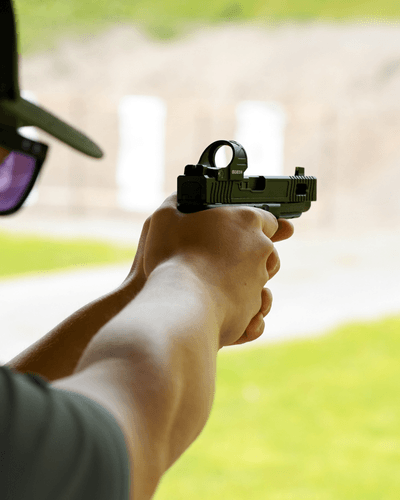
A 10-yard zero is common for close-range pistol use, especially for concealed carry.
At typical defensive distances, this keeps your point of impact very close to your point of aim. You’re minimizing the need to think about adjustments in high-pressure situations where speed matters more than precision at distance.
The tradeoff is that as distance increases, your shots will begin to impact higher than your point of aim. That’s usually acceptable within the intended use, but it’s something to be aware of if you start stretching distance.
The 25-yard zero is one of the most widely used options for both pistols and some rifle setups.
It offers a balance between close-range usability and moderate distance performance. At typical handgun distances, your point of impact stays close enough to your point of aim to remain practical, while still giving you more consistency as you move farther out.
For many shooters, this becomes a default because it works well across a variety of scenarios without requiring constant adjustment.
A 50-yard zero is especially common on rifles and pistol caliber carbines.
It tends to provide a flatter trajectory across a wider range of distances, which means your point of impact stays closer to your point of aim from close range out to mid-range distances.
This makes it a strong option for shooters who expect to engage targets at varying distances without wanting to think about holdovers as much.
A 100-yard zero is typically reserved for rifles and more precision-oriented shooting.
It provides a clear reference point at longer distances and works well for shooters who plan to dial adjustments or use reticle holds beyond that range.
For most handgun applications, it’s less practical. But for rifles, especially those set up for distance, it can be a useful baseline.
It’s tempting to look for a single answer that works in every situation, but zero distance doesn’t work that way.
The “best” zero depends entirely on how the firearm is being used.
A concealed carry pistol and a rifle set up for distance are solving very different problems. Trying to force them into the same zero distance doesn’t make sense.
Even within the same category, preferences can vary. Some shooters prioritize simplicity at close range. Others want more consistency across distance. Both approaches are valid, they just reflect different priorities.
What matters is choosing a zero that aligns with your use case and understanding how it behaves once you’ve set it.
One of the most overlooked factors in zeroing is height over bore; the distance between your optic and your barrel.
Because your optic sits above the barrel, your shots will always impact below your point of aim at very close distances, regardless of your zero.
This is most noticeable with rifles, where the optic sits higher above the bore than it does on a handgun. At close range, that offset can be significant enough to affect shot placement if you don’t account for it.
The key takeaway is simple: at close distances, you may need to aim slightly higher than your intended point of impact. This isn’t a flaw in your zero, it’s just how the system works.
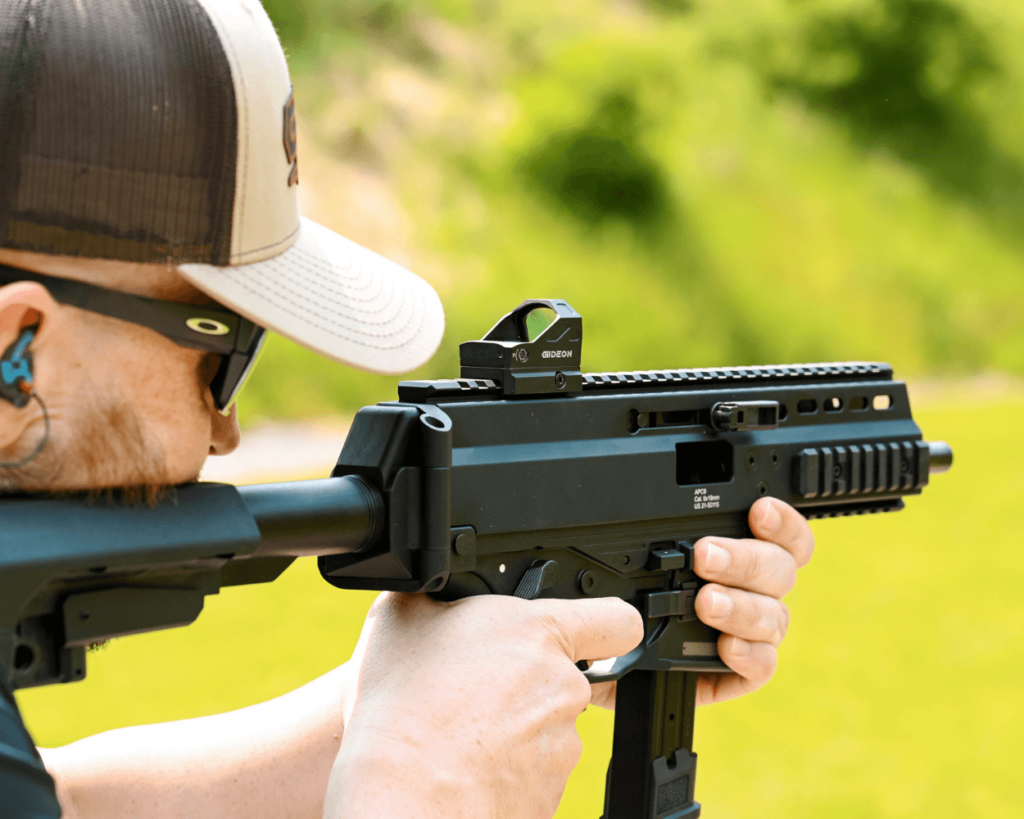
Once you understand how different zero distances behave, the decision becomes much simpler.
If your primary use is close-range defensive shooting, a shorter zero distance may make more sense. If you’re working with a rifle or PCC and expect to engage targets at varying distances, a longer zero can provide more flexibility.
There’s no need to overcomplicate it.
Pick a zero that matches how you actually use your firearm, confirm it at the range, and take the time to understand how your shots behave at distances beyond that zero.
That understanding is what allows you to make confident shots, not the number itself.
Zeroing your red dot is only the first step.
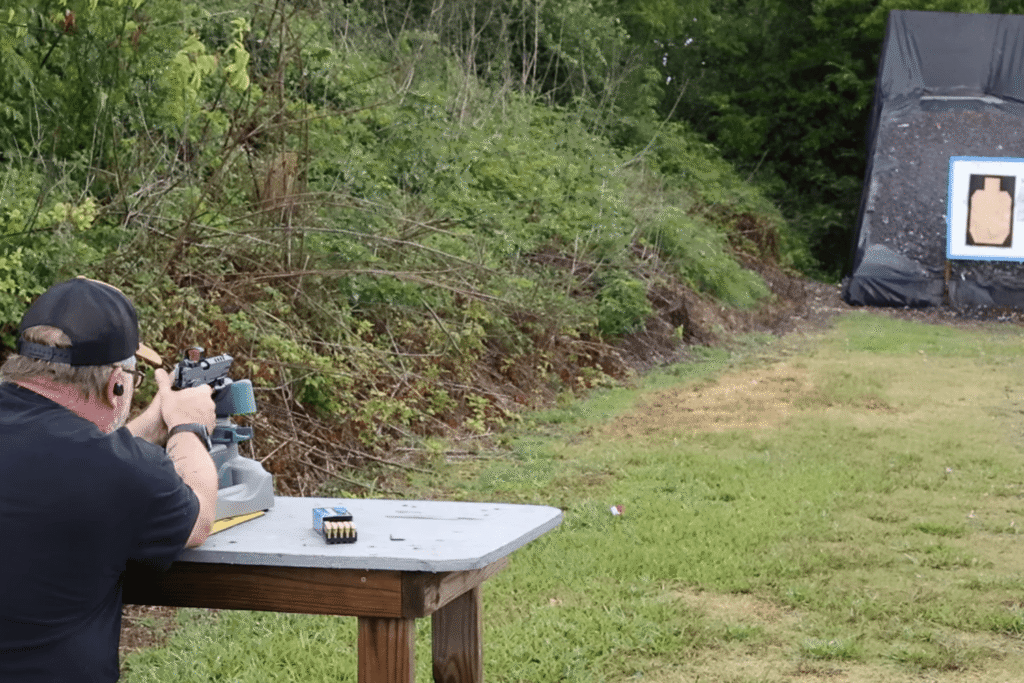
What matters just as much is verifying how your setup performs across different distances. Shoot at 10 yards, 25 yards, 50 yards, and beyond if possible. Pay attention to where your rounds land relative to your point of aim.
That process builds familiarity with your setup and removes guesswork when it counts.
Because in the end, the goal isn’t to memorize a “correct” zero distance, it’s to understand your equipment well enough to use it effectively.