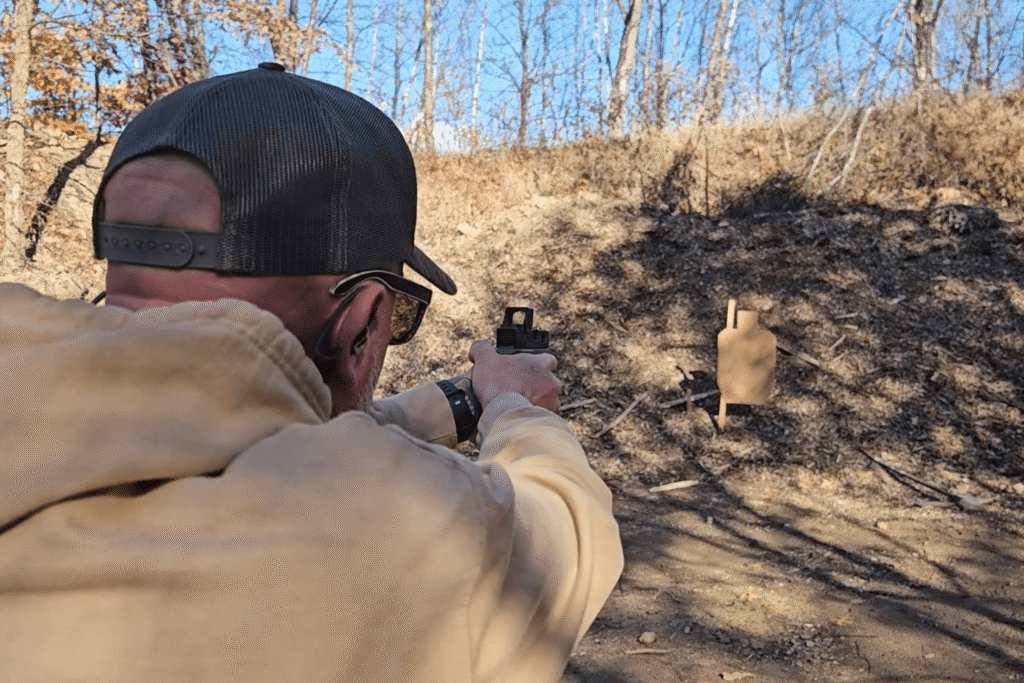

Speed is one of the first things shooters start chasing once they become comfortable with a red dot.
The logic makes sense. Red dots are faster than iron sights, they simplify the aiming process, and they allow you to stay target-focused instead of shifting your vision back and forth. But as many shooters quickly discover, simply trying to “go faster” often leads to worse results; missed shots, inconsistent groups, and a feeling that the dot is working against you instead of helping.
The problem isn’t the optic, it’s how speed is being approached.
Shooting faster with a red dot isn’t about moving quicker or pulling the trigger sooner. It’s about building efficiency into every part of your shooting process so that speed becomes a natural byproduct, not something you have to force.
One of the biggest advantages a red dot provides is the ability to remain target-focused. Unlike iron sights, where your attention shifts to the front sight and away from the target, a red dot allows you to keep your eyes locked on what you’re trying to hit while the aiming point overlays your line of sight.
This becomes especially important when you begin to increase speed.
If your eyes are searching for the dot or shifting focus between the optic and the target, you’re already introducing delay. The dot should appear naturally within your field of view as the gun comes up, not something you have to hunt for after the fact.
Shooters who struggle with speed often focus on moving the gun faster, when in reality the issue starts with where their attention is. Your eyes should lead the process, with the gun following into alignment.
Another common issue is the tendency to over-correct the sight picture.
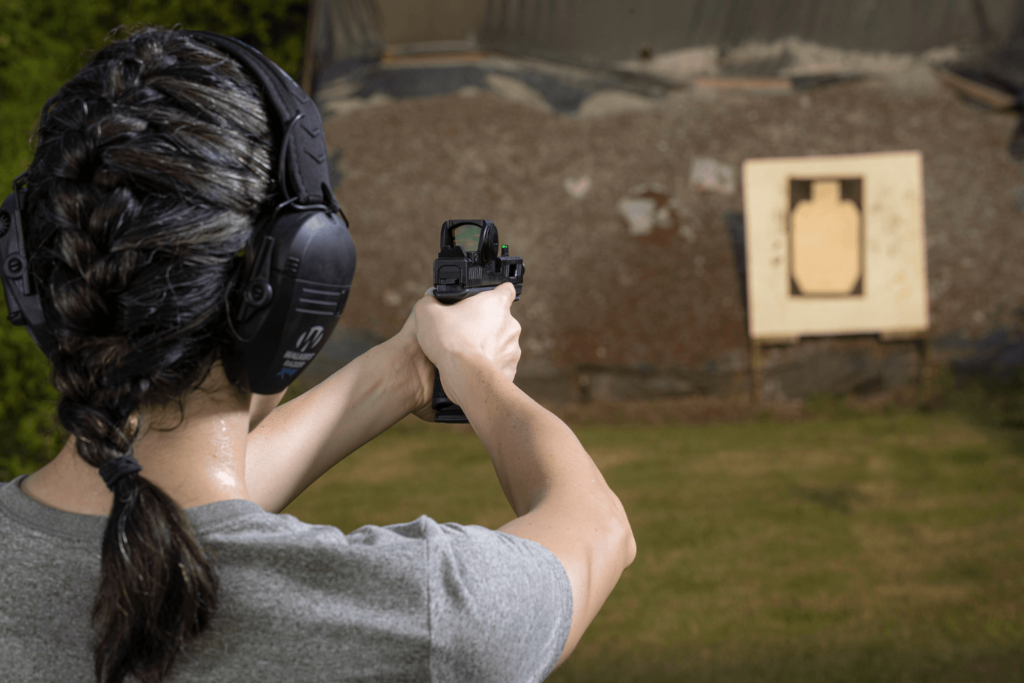
At slower speeds, it’s easy to wait for the dot to settle perfectly in the center of the target before breaking the shot. As speed increases, that level of precision becomes both unrealistic and unnecessary. Trying to maintain it often leads to hesitation and wasted movement.
The key is understanding what an acceptable sight picture looks like for the distance and target you’re engaging.
If the dot is within your intended impact zone, the shot is there. Waiting for it to become perfectly still doesn’t improve accuracy, it just slows you down and can actually introduce more movement as you continue to adjust.
Learning to trust a “good enough” sight picture is one of the biggest steps toward shooting faster without sacrificing accountability.
Speed without control is unpredictable, and most control issues trace back to grip.
A proper grip doesn’t just manage recoil, it creates consistency. When the gun recoils, the dot should lift and return along a predictable path. That predictability is what allows you to fire follow-up shots with confidence, because you know where the dot is going to be.
If the dot is leaving your field of view or returning in a different place after every shot, the issue isn’t timing, it’s stability.
Consistent hand placement, balanced pressure, and proper support from both hands all contribute to keeping the gun flat through recoil. When that foundation is in place, the dot becomes easier to track, and speed increases naturally because you’re no longer waiting to reacquire your sight picture.
Fast shooting is often misunderstood as simply pulling the trigger quickly. In reality, it’s about timing your shots based on what you can see.
Tracking the dot means visually following it as it lifts during recoil and watching it return to the target. This gives you confirmation that the gun is back where it needs to be before you fire again. Without that visual feedback, you’re essentially guessing.
The goal isn’t to eliminate movement, that’s not realistic. The goal is to understand and observe it. When you can see the dot clearly throughout the firing cycle, you gain the ability to increase speed while still maintaining control over where your shots are going.
As shooters try to go faster, trigger control is often the first thing to degrade.
Instead of a consistent, controlled press, the trigger becomes reactive; pulled quickly without regard for how it affects the gun. This introduces unnecessary movement and causes shots to drift, especially during rapid fire.
A good trigger press doesn’t need to be slow, but it does need to be repeatable.
The focus should be on pressing the trigger in a way that doesn’t disturb the alignment of the gun. If the dot moves significantly as you break the shot, that’s an indication that something in your trigger control needs refinement.
Speed comes from consistency, and the trigger is a major part of that equation.
Sometimes the issue isn’t technique, it’s setup. A red dot that’s too bright can appear distorted, larger than it actually is, or even starburst depending on the shooter’s vision. This makes it harder to define your point of aim and more difficult to track the dot during recoil.
Running the brightness just high enough to be visible in your environment will give you a cleaner, more precise aiming point.
This becomes increasingly important at speed, where clarity helps reduce hesitation and allows you to trust what you’re seeing.
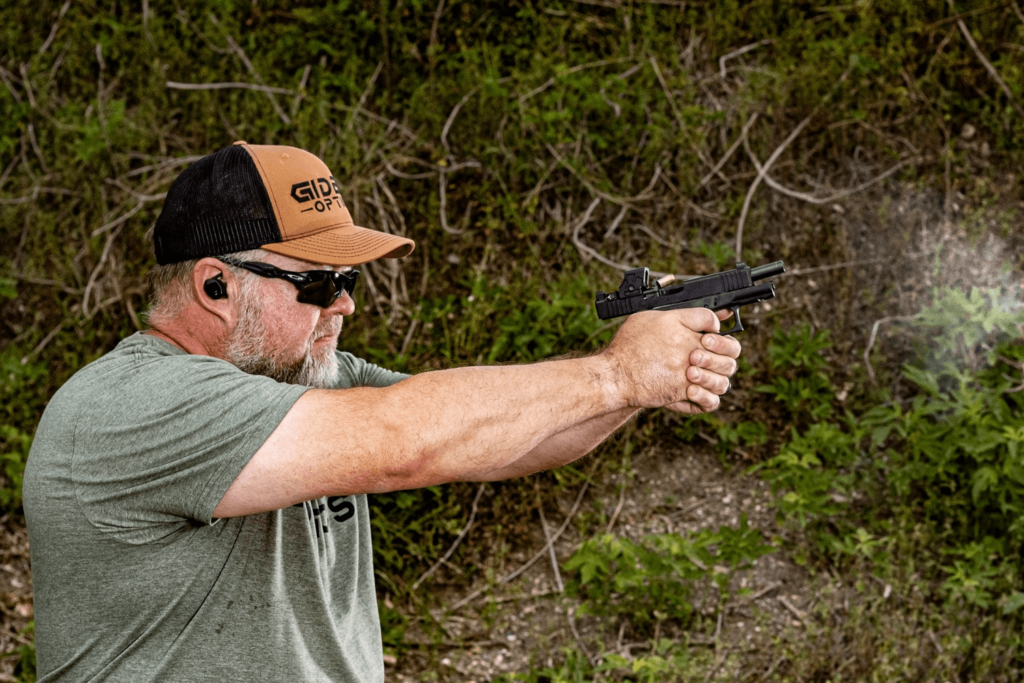
Trying to force speed rarely works. When shooters focus directly on going faster, they often skip steps in the process or introduce unnecessary movement. The result is usually inconsistent performance rather than meaningful improvement.
Efficiency is what actually drives speed.
When your vision is consistent, your grip is stable, your trigger press is controlled, and your sight picture is understood, everything becomes smoother. There’s less wasted motion, less hesitation, and fewer corrections needed between shots.
At that point, speed isn’t something you’re chasing, it’s something that naturally develops.
Improving speed takes deliberate practice. That means working at a pace where you can still see the dot, maintain control, and keep your shots within your intended target area. From there, you gradually increase your pace without sacrificing those fundamentals.
If accuracy begins to fall apart, it’s a sign that you’ve pushed past your current ability. Dial it back slightly, regain control, and build from there. Progress comes from consistency, not from occasional bursts of speed.
A red dot gives you the ability to shoot faster, but it doesn’t do the work for you.
Real improvement comes from understanding how to use the optic as part of a larger system; one that includes vision, grip, trigger control, and decision-making. When those elements are working together, speed becomes a natural extension of your shooting rather than something you have to force.
And when that happens, you’re not just shooting faster, you’re shooting better.
If you’re working on improving speed and consistency, make sure you’re running an optic that gives you a clear, reliable sight picture. Explore the Gideon lineup to find a red dot that supports how you actually shoot.