
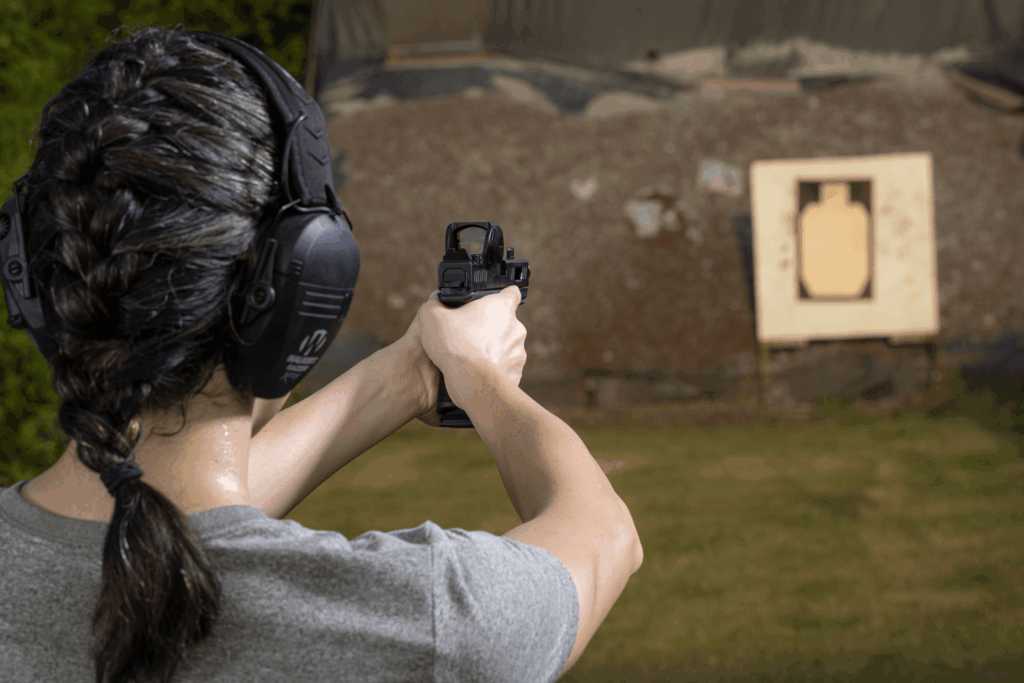

For shooters looking to gain a competitive edge or simply build confidence with their gear, red dot training is one of the most efficient ways to improve performance. But the difference between casual practice and meaningful progress comes down to one thing: structure.
A well-built practice routine ensures your red dot sight works with your body under pressure. Whether you’re shooting USPSA, Steel Challenge, or simply want faster, more accurate shots on the range, the right combination of dry fire drills, live fire, and movement work can dramatically increase speed and consistency.
Let’s walk through how to build a weekly red dot training routine that delivers real results.
Red dot sights offer faster target acquisition, better low-light visibility, and the ability to focus on the target instead of the front sight. But without focused reps, shooters often struggle with:

And most importantly: confidence under time pressure.
Before jumping into drills:
This prevents chasing problems that stem from your gear, not your skill.
Dry fire training is the foundation of a good routine. It’s safe, free, and can be done almost anywhere.
Here are a few core drills every shooter should run weekly:
Goal: The dot appears in the window without hunting
Builds subconscious target-focused shooting ability
These dry fire drills build critical micro-skills that pay off when you add speed, movement, and pressure later.
Live fire confirms what dry fire builds. These simple, high-value drills reinforce speed, accuracy, and control:
Goal: smooth, predictable transitions, not snapping or overshooting
Consistency beats intensity. You don’t need to train every day, but you do need to train smart. Here’s a simple 5-day split to start:
| Day | Focus |
| Monday | Dry fire: dot acquisition, wall drill |
| Tuesday | Live fire: transitions + 5-shot drill |
| Wednesday | Movement drills: side-step and shoot, advancing shots |
| Thursday | Dry fire: tape trick, draw-to-dot |
| Friday | Live fire: full Bill Drill or USPSA-style stage |
Tip: Use a training log or app (like Splits or Range Buddy) to track times and hit percentages.
Shooting well on a flat range is easy. Shooting well while moving, or under fatigue, is where gains are made.
Include these ideas:
These stressors simulate real-world or match conditions, helping you trust your dot without overthinking it.
Avoid these common pitfalls:
Red dot sights unlock tremendous potential, but only if you put in the reps. Building a weekly routine that combines dry fire drills, live fire sessions, and movement work will boost your speed, accuracy, and confidence in any scenario.
Whether you’re training for your next match or building reliable self-defense skills, consistency is the secret to success.
Need an optic that’s built to train as hard as you do? Explore Gideon Optics’ full lineup of red dot sights designed for durability, clarity, and fast acquisition, on or off the clock.