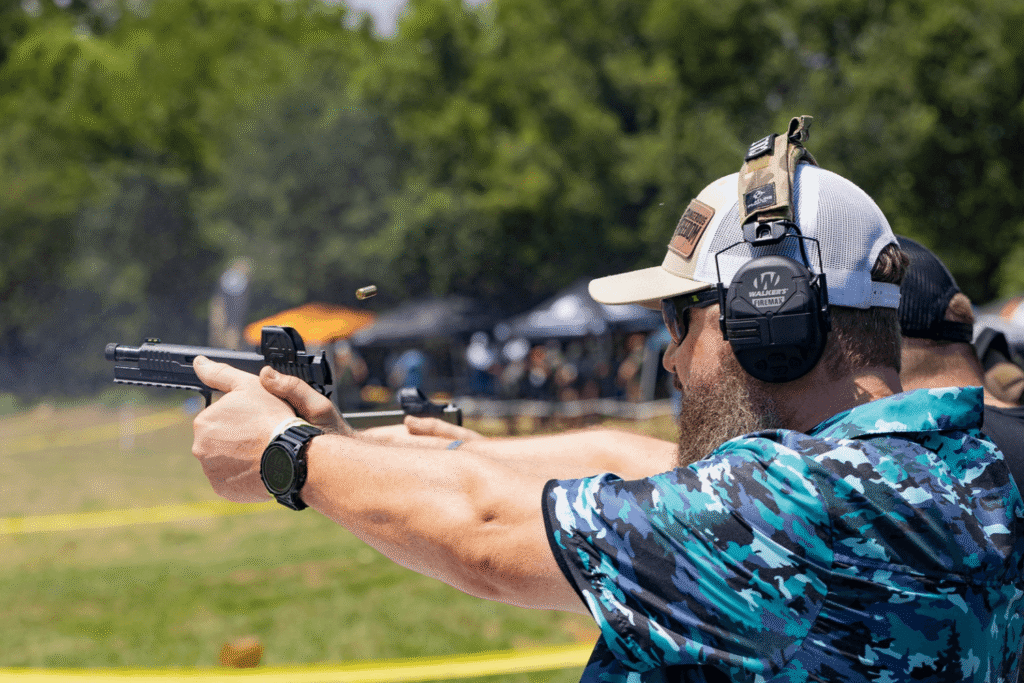

You know your pistol. You have spent time behind the dot, established a practice routine, and started wondering what it would be like to put those skills into a different setting.
Then you look up a local shooting match and encounter divisions, equipment rules, registration details, and a schedule that assumes you already know what happens next.
That unfamiliar process can feel like a bigger barrier than the shooting itself.
You do not need to understand the entire competitive shooting world before exploring a local event. You do need to choose an appropriate match, confirm its requirements, and arrive prepared to follow its procedures. Some clubs require a new-competitor safety check or orientation before participation, making early contact with the organizer an important first step.
Your first goal is safe participation. The score gives you something to build on later.
“Competition shooting” is not one activity with one set of rules.
Different organizations and match formats have different equipment requirements and procedures. Even when two events both involve handguns, you should not assume that the same firearm, holster, or accessories are eligible for both. USPSA and IDPA publish their own rules, and IDPA also provides separate equipment appendices.
Start with an event you can realistically attend. Look for a local club’s match listing, then contact the organizer and explain your experience honestly.
Tell them that you are comfortable using your firearm but new to competition. Ask whether the event welcomes first-time competitors, whether orientation is required, and what abilities you should already have before arriving.
This is not an admission that you are unprepared. It is how you find out what preparation actually means for that event.
If you are unsure whether you are ready to participate, ask about observing a match first and confirm any spectator requirements.
A division is an equipment category, not a ranking of how skilled you are.
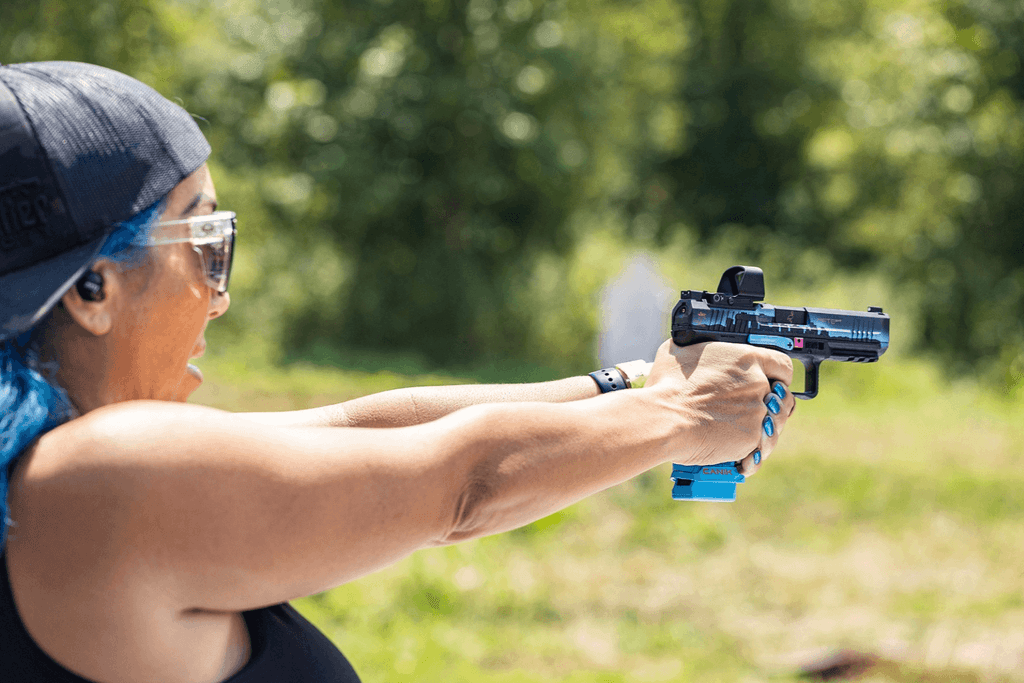
For a shooter who already uses a pistol-mounted optic, the first question is whether the complete firearm setup meets a particular division’s requirements. The optic alone does not settle that question; other firearm features and equipment can affect eligibility. Current rules and equipment appendices are the appropriate starting points.
Rather than trying to interpret every category by yourself, send the organizer a clear description of your setup. Include the firearm model, optic, relevant modifications, and the holster you intend to use.
Ask where that combination fits and whether anything needs attention before registration.
Some clubs offer flexibility for newcomers, but local accommodations should not be mistaken for universal rules. Confirm what your event allows rather than relying on a forum comment about someone else’s first match.
Watching experienced competitors can make it seem as though a specialized belt, several accessories, and a dedicated competition pistol are the price of admission.
Before buying anything, ask what your current equipment can support.
Some clubs explicitly encourage first-time competitors not to purchase a large amount of gear in advance. They can help newcomers identify what is necessary and what can wait until they better understand the sport.
That does not mean every carry setup is automatically match-ready. Holsters, magazine arrangements, firearms, and other equipment must meet the applicable requirements. For example, clubs commonly specify trigger-guard coverage and secure firearm retention as part of their holster requirements.
The sensible approach is to identify a specific need before spending money.
If your existing optic is functioning properly and eligible for the event, there is no reason to replace it simply because you are trying competition. Learn what you like about the activity before building an entire setup around it.
A match is not a substitute for introductory firearm instruction.
Be candid about any activity you have not learned under appropriate supervision. If the event requires skills or procedures beyond your current experience, ask about a suitable class or new-shooter program before participating.
USPSA notes that many affiliated clubs require new competitors to complete a safety check before shooting a match. Local clubs may also provide briefings covering commands, designated handling areas, and other procedures.
Do not assume that familiar range habits transfer unchanged into a match.
In particular, find out how to arrive with your firearm and where handling is permitted. USPSA club guidance commonly describes a cold range, where firearms remain unloaded and holstered or cased except under the prescribed supervision or in a designated area. Follow the actual event’s instructions, and do not uncase or handle a firearm at check-in simply to show someone your equipment.
If anything is unclear, ask before acting.
The match organizer should be your source for expected ammunition quantities, magazine requirements, and any event-specific equipment.
Avoid treating someone else’s packing list as universal. A local club’s recommendations may reflect its typical stages and procedures rather than the requirements of every competition.
Once you have confirmed those details, think about the rest of the day. Ask about the expected finish time, available facilities, and whether you should bring food, water, or weather protection. A match may involve time spent waiting, walking between areas, and listening to briefings, not just shooting.
A useful pre-event checklist includes:
Keep the preparation practical. The goal is to arrive with what you need, not every accessory you own.
Give yourself time to check in without rushing.
Tell registration staff that this is your first match, even if you already mentioned it by email. If you are assigned to a squad (the group you will move through the match with) let the appropriate official know you are new.
Some clubs provide a mentor or guide for first-time competitors. Others direct newcomers to a separate briefing. Ask what support is available rather than assuming someone will recognize that you need it.
Pay attention to the event’s terminology, handling rules, and instructions. Watching experienced participants can help you understand the flow, but observation does not replace an official briefing.
You are not expected to arrive knowing everything. You are expected to listen and ask when you do not understand.
A stage is an individual course of fire within a match. Before participating, you will need to understand the instructions and procedures that apply to it.
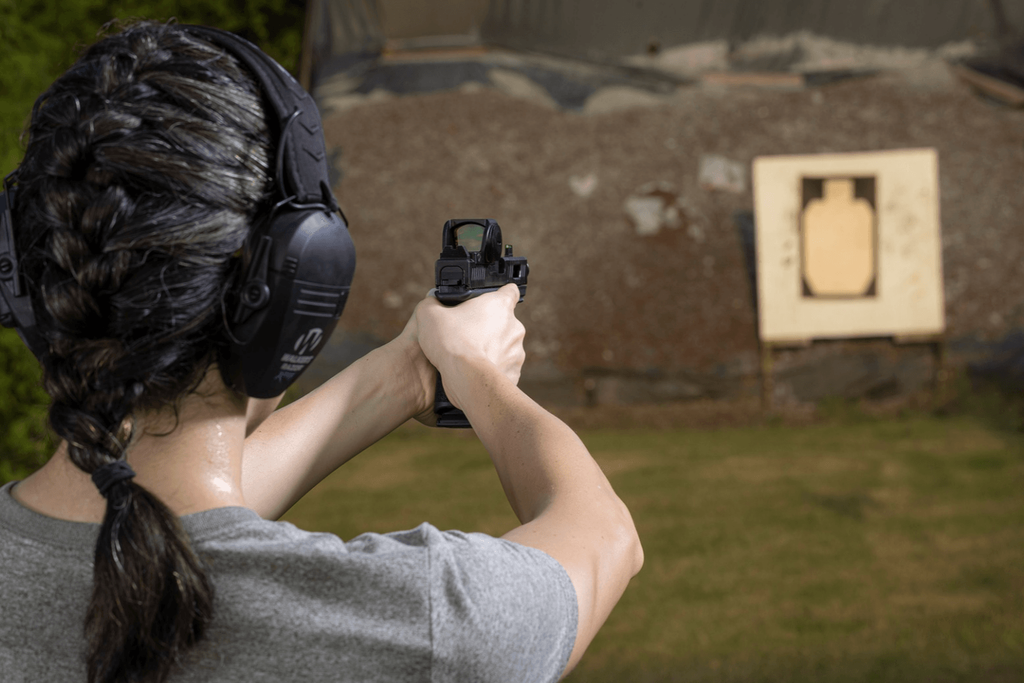
At a local USPSA event, for example, competitors may be organized into squads, attend an opening meeting, and rotate through stages. New shooters may receive additional orientation before joining that process.
Your first visit is partly about learning that rhythm: where to be, when to listen, when you are allowed to handle equipment, and how officials direct the activity.
Do not treat another competitor’s pace as a requirement to match. Familiarity can make experienced shooters look effortless, but you are seeing the result of time spent learning the same process that is new to you.
Focus on understanding the instructions and following them safely. There will be time to evaluate performance once you have a clear picture of the activity.
A local match is also a shared event, not simply a series of individual turns.
Ask your squad or an official what assistance is appropriate between competitors and when you should provide it. Do not step into an active area or begin resetting anything based only on what you think happens next.
Helping in the way the organizer requests gives you another opportunity to learn the event’s flow and meet the people involved. It also keeps you engaged when you are not shooting.
The same principle applies throughout the day: ask, listen, and follow the established process rather than guessing.
After the match, resist the urge to explain every difficulty as an equipment problem.
Instead, separate what you learned into a few useful observations. Were the procedures unfamiliar? Did you understand the instructions? Was there a skill you would like to develop through qualified instruction? Did a particular piece of equipment create a genuine, repeated limitation?
Those questions give your next practice session, or next class, a purpose.
If you do identify a gear issue, check the rules and consider the complete setup before changing anything. A purchase should address an actual need, not simply reflect what the fastest person in your squad happened to use.
You do not have to decide in advance whether competition will become your main hobby. Your first event can simply be an opportunity to explore another way of enjoying shooting.
Choose a suitable match, speak with the organizer, confirm your equipment, and complete any required orientation. Arrive ready to learn rather than prove something.
A useful first result is not a particular place on the scoreboard. It is leaving with a clearer understanding of the sport, and knowing whether you want to come back.