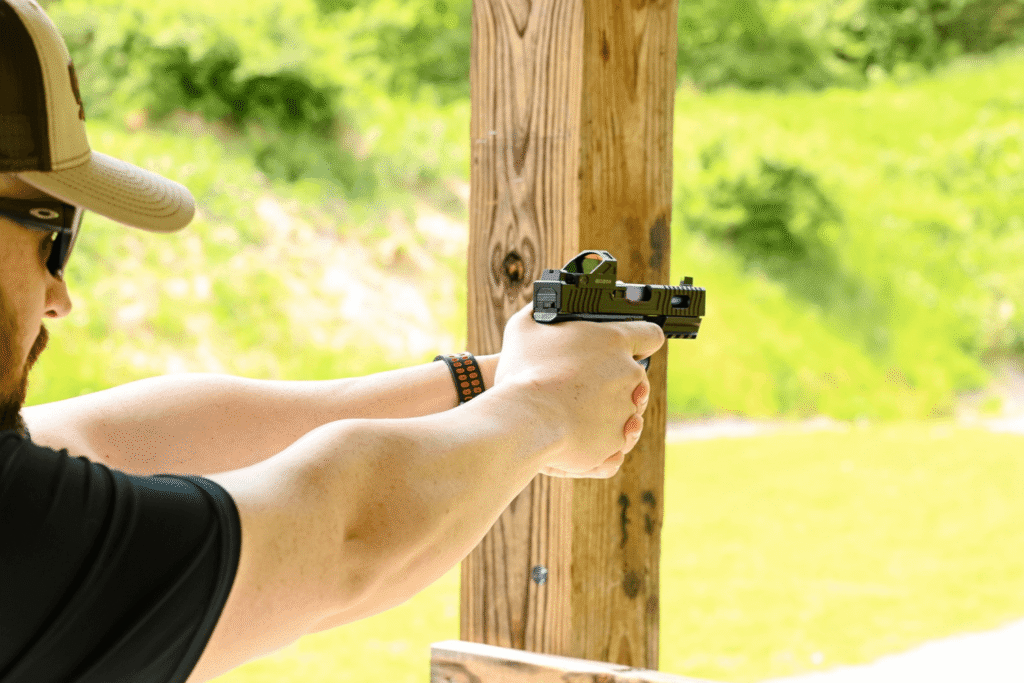

Regular range time gives you opportunities to practice, but it does not always tell you what needs work. You may notice the same inconsistency from session to session without understanding its cause; or feel comfortable with your equipment while wondering what to focus on next.
That is where a firearms training class can offer something different: an instructor who can observe your performance, answer questions, and help you identify priorities. For an experienced shooter, that might mean examining a habit that has gone unnoticed. For someone newer, it may mean building a clearer foundation.
Getting the most from that instruction starts with choosing a course that fits your experience and goals. Preparing your equipment matters, too, but so does arriving ready to receive feedback; and leaving with a practical understanding of what to work on afterward.
Start with the reason you are considering instruction.
Maybe you recently switched to a pistol-mounted optic and want help evaluating your fundamentals. Perhaps your practice has become repetitive, and you need informed feedback. Or you are interested in competition but want structured preparation before attending a match.
Those are more useful starting points than choosing whichever course has the most exciting name.
Read the course description for its intended audience, learning objectives, and prerequisites. Training providers distinguish between introductory and more advanced offerings, and some require prior coursework or demonstrated experience. SIG SAUER Academy, for example, identifies experience requirements within its course listings.
A course that is too advanced can leave you trying to catch up instead of absorbing the instruction. A course that repeats material you already understand may also miss your goal, unless reviewing those fundamentals is exactly what you need.
The right level is the one that supports useful learning, not the one with the most impressive title.
A course listing cannot account for every student’s background or equipment.
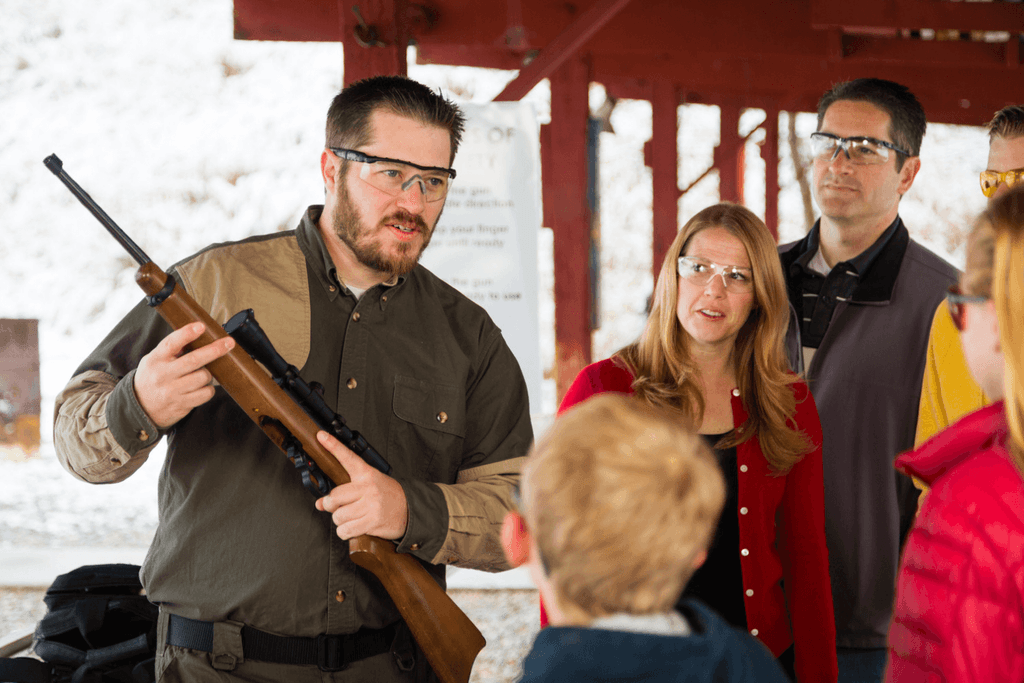
If you are uncertain about your readiness, contact the provider. Explain your experience plainly: what you have practiced, what formal instruction you have completed, and what you hope to improve.
Be specific about uncertainty. “I shoot regularly” tells an instructor less than a short description of your experience and the activities you have (or have not) learned under supervision.
Ask what students are expected to know before arriving. Confirm whether the course addresses your goal and whether another offering would be a better starting point.
If accessibility, prolonged standing, hearing, or other participation needs may affect your experience, discuss them in advance. That conversation helps both you and the provider determine whether the class is a suitable fit and what arrangements may be possible.
Getting an answer before registration is better than discovering a mismatch at the opening briefing.
Your usual range setup is not automatically the right setup for a class.
Providers may specify firearm types, holster designs, magazine quantities, ammunition requirements, and protective equipment. These requirements can vary considerably. Gunsite, for example, publishes different equipment guidance for handgun, rifle, carbine, and shotgun courses, including restrictions that students need to review before attending.
Do not substitute a generic online packing list for the instructions supplied by your instructor.
Read the requirements early enough to resolve questions without a last-minute purchase. If an item you own does not clearly meet the description, ask. A photograph and model name may help the provider evaluate it.
Also ask about rentals or loan equipment before buying something solely for one class. Availability is not guaranteed, but checking first may prevent an unnecessary purchase.
The purpose of preparation is to remove obstacles to learning, not build a completely new collection of gear.
A class may introduce unfamiliar concepts. You do not need every part of your setup to be unfamiliar, too.
Where the course allows it, bring equipment you have used and understand. Know how to access your optic’s controls, identify its battery type, and find the relevant user manual. Follow the provider’s instructions about equipment condition and whether sights must be zeroed before arrival.
Requirements differ here as well. Some courses specify that an optic should arrive securely mounted and zeroed, while others include time for confirming or establishing zero. Check rather than assume.
For an optic-equipped firearm, preparation is not an invitation to make unnecessary last-minute changes. If you suspect a mounting or function problem, address it according to the manufacturer’s instructions and seek qualified help when needed.
A training day is more useful when you can pay attention to the lesson instead of trying to understand a new control layout or troubleshoot unresolved equipment issues.
A class involves more than the time spent shooting.
You may be outdoors, listening to demonstrations, taking notes, and moving between activities. Prepare for the environment and schedule described by the provider.
Gunsite’s published requirements include climate-appropriate clothing, sturdy closed-toe footwear, eye and hearing protection, and a small pad for notes. Other instructors also recommend planning for meals, hydration, spare batteries, and basic equipment care.
Use the course’s instructions to build a short checklist:
Confirm how your firearm should be transported into the facility and when handling is permitted. Do not uncase or handle it to demonstrate something unless instructed to do so under the course’s procedures.
Small logistical questions are worth resolving beforehand. They should not consume your attention when instruction begins.
Having experience is valuable. Treating every familiar habit as settled fact can make learning harder.
You do not have to abandon everything you know to benefit from instruction. You do need to give the instructor a fair opportunity to explain the approach being taught.
If a method differs from what you have learned elsewhere, ask about the reason at an appropriate pause. “What problem is this intended to address?” invites a more useful explanation than debating whose method is correct.
The same applies to feedback. Before deciding that a correction does not apply to you, make sure you understand what the instructor observed and what they are asking you to change.
Your goal is not to prove that you arrived proficient. It is to leave with a better understanding of your own performance.
Useful questions connect an observation to something you can recognize later.
Instead of asking only whether a result was “good,” ask what the instructor noticed. What should you pay attention to next time? What indicates that you are applying the lesson correctly? What should you avoid practicing independently until you receive further supervision?
These questions help distinguish a memorable explanation from an actionable takeaway.
Ask whenever you do not understand a safety instruction. Never improvise because you are concerned about interrupting or appearing inexperienced.
For other questions, respect the class structure. An instructor may need to finish a demonstration or address a shared issue before discussing your individual setup. Write the question down if necessary so it does not get lost.

A list of everything the class covered may be less useful than a clear record of what you personally need to remember.
Bring a notebook; it appears on equipment lists for both established schools and independent instructors.
Record the correction, the explanation behind it, and any practice guidance you were given. If you do not understand your own note, clarify it before leaving.
For example, “work on fundamentals” is difficult to act on. A note identifying the specific issue the instructor observed, and the recommended next step, preserves much more of the lesson.
Ask permission before recording audio, video, or other students. A notebook is often the simplest way to retain information without distracting from instruction.
Before the final briefing ends, identify a manageable set of takeaways.
You do not need to turn every lesson into an immediate project. Start with the priorities the instructor considers appropriate for your current level, and distinguish between activities suitable for independent practice and those requiring supervision.
If practice recommendations are unclear, ask for clarification while you still have access to the instructor. Do not reconstruct a procedure from a few incomplete notes later.
When any suggested practice involves firearm handling, follow the relevant safety procedures and the instructor’s guidance. A course completion certificate does not make every exercise suitable to repeat in every setting.
It can also help to separate equipment observations from skill-development goals. If something about your setup caused a repeated problem, document it and discuss an appropriate solution. If the main issue was unfamiliarity or inconsistency, buying a replacement may not address it.
The value of instruction is not limited to what happens while the instructor is watching.
Choose a course that fits your goals and experience. Confirm its requirements, arrive with suitable equipment, and leave room to reconsider familiar habits. During the class, ask questions that help you understand feedback, not simply collect more information.
Then leave with a short, realistic plan for what comes next.
You may decide to refine your current practice, seek additional instruction, or reassess part of your setup. Whatever the next step, it should follow something you learned, not the feeling that completing a class means you need to buy more gear.