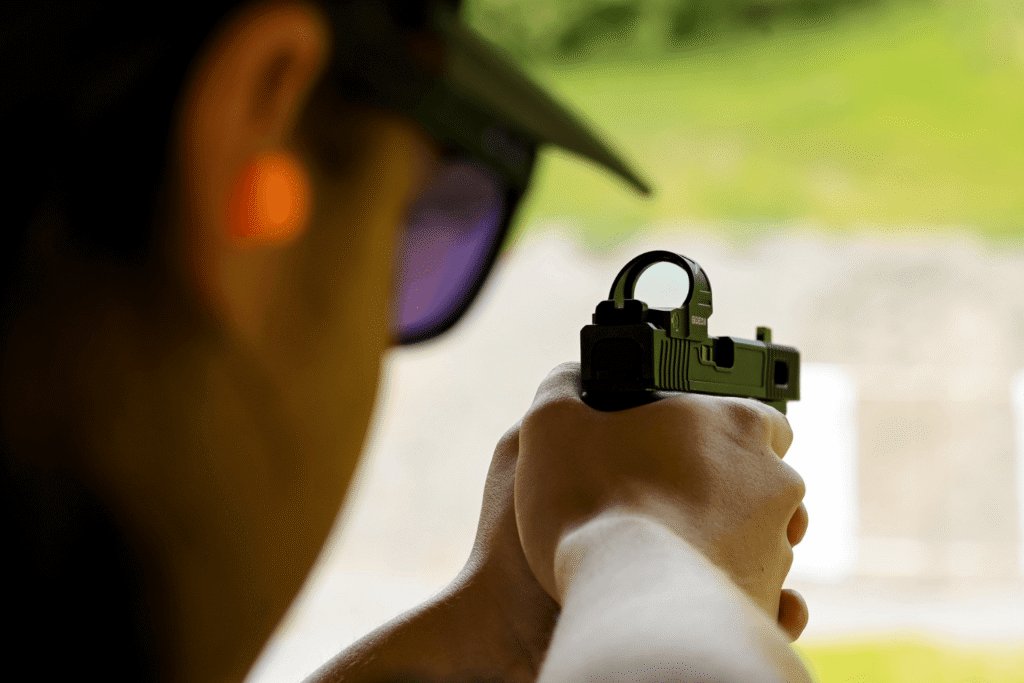

You draw, press the pistol out, and the window looks empty. So you tilt the gun, dip the muzzle, raise it again, and start searching for the dot. By the time it shows up, the simple act of aiming feels slower and more frustrating than using iron sights ever did.
That experience is common when shooters first start using a pistol-mounted red dot, but it usually is not a problem with the optic. More often, it is feedback from your draw stroke. Small changes in grip pressure, wrist angle, and where you bring the pistol to your eye can move the dot just outside the window. The good news is that these are trainable problems, and a few deliberate reps can make a major difference.
A red dot does not need to be perfectly centered in the window to be useful. If you can see the dot and keep it on the intended point of impact, you can make the shot. The problem starts when the dot is entirely outside your field of view at the end of the presentation.
When that happens, resist the urge to wave the gun around until the dot appears. That “fishing” movement may find the reticle eventually, but it does not fix the underlying issue. It teaches your body to make a different correction every time rather than building one consistent presentation.
Instead, treat the missing dot as information. If the dot regularly appears only after you tip the muzzle down, you may be presenting the gun too high. If it enters from the left or right side of the window, small differences in your grip or wrist angle may be moving the optic off your visual plane.
A quality red dot does not hide these inconsistencies. It makes them easier to see. Once you understand what the dot is telling you, it becomes a tool for improving your draw rather than a source of frustration.
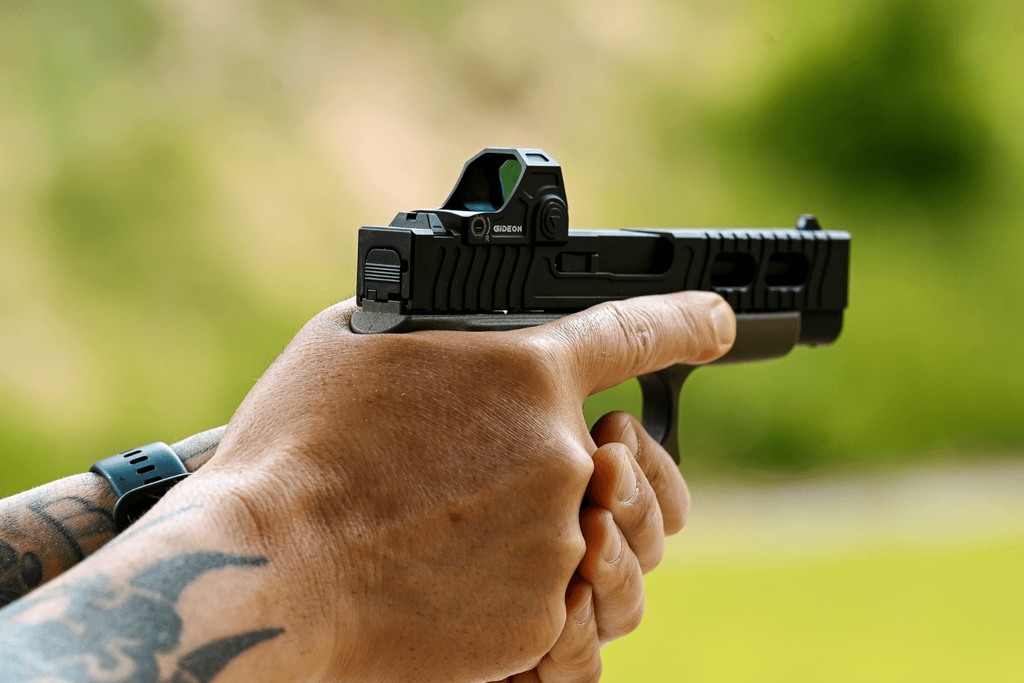
Most dot-acquisition problems begin before the pistol reaches full extension. Your grip may change slightly in the holster, your wrist may be angled differently from one draw to the next, or you may be driving the pistol toward your nose instead of bringing it naturally into your dominant eye’s visual plane.
Tiny variations matter. A minor change in wrist angle can move the optic window enough that the dot is no longer visible. The faster you attempt to draw before the movement is consistent, the more likely those small errors are to show up.
Start by slowing down. Establish a firm, repeatable firing grip while the pistol is still holstered. Clear the holster smoothly and bring the gun up into your line of sight rather than lowering your head to meet the optic. Your eyes should already be focused on the target; the pistol should arrive between your dominant eye and that target.
The goal is not to force the dot into the window. It is to repeat the same draw and presentation often enough that the window naturally arrives where your eye expects it to be.
Your grip does more than control recoil. It also affects where the optic lands at the end of the draw.
A common issue is uneven pressure between your firing hand and support hand. Too much tension from one side can rotate the pistol slightly, shifting the dot out of the window. The same thing can happen when a shooter over-grips the pistol in an effort to be fast or aggressive.
The answer is not to squeeze harder. It is to build a repeatable grip with consistent contact points. Focus on getting your firing hand high on the backstrap, then bring the support hand into the same position on every presentation. Keep enough pressure to control the pistol without creating unnecessary tension in your wrists or shoulders.
Pay attention to patterns during dry practice. If the dot routinely appears from the same edge of the window, that can point to a repeatable grip or wrist-angle issue. Make one small adjustment, then run a few slow reps. Avoid changing everything at once; you will learn more by isolating one variable at a time.
One of the biggest mental shifts when moving from iron sights to a pistol red dot is learning where to look. Your visual attention should stay on the target, not on the optic window and not on the dot itself.
Think of the dot as an overlay on the target. When the gun arrives in the correct position, the reticle should simply appear in your field of view. If you drop your eyes to search the window, you often change your head position and make it harder to present the pistol consistently.
Keep both eyes open when possible and maintain your focus on the exact place you want to hit. Then bring the pistol to that point. This helps build a target-focused presentation instead of a sight-focused scavenger hunt.
It may feel slower at first, especially if you are used to visually checking your front sight before every shot. Give the new process time. A correct, repeatable presentation will become faster than searching for the dot after an inconsistent draw.
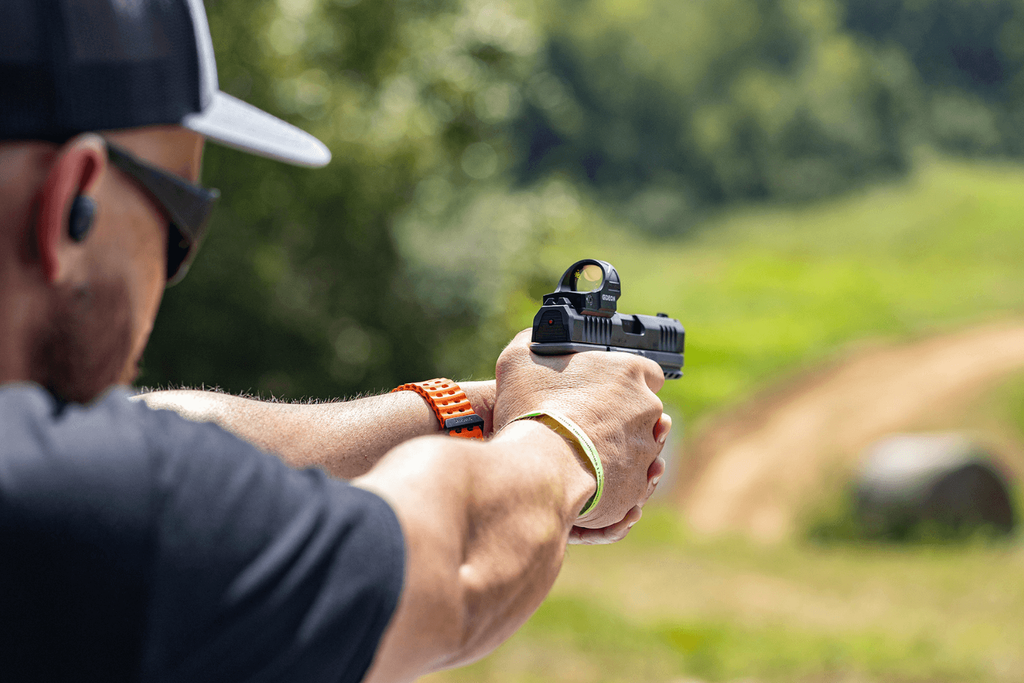
Dry practice is one of the best ways to identify why the dot is not appearing consistently. Before beginning, verify that the firearm is unloaded, remove all live ammunition from the practice area, choose a safe direction, and follow all applicable firearm-safety rules.
Start with the pistol at full extension and a visible dot on a safe, defined practice target. Notice the relationship between your hands, the optic, your dominant eye, and the target. This is the position you are trying to return to every time.
Next, bring the pistol back to a compressed position near your chest without changing your grip. Slowly press it back out toward the target. Do not rush. At full extension, pause and check whether the dot is visible.
If the window looks empty, do not fish for the dot. Instead, pay attention to what correction brings it back: did you lower the muzzle, raise it, or rotate the pistol slightly? Reset, make that correction earlier in the presentation, and repeat.
Run 10 to 15 slow, focused repetitions. The goal is not speed. The goal is to make the dot show up in the same part of the window every time. Once that is reliable, incorporate a safe holster draw and repeat the drill from your actual carry position.
Not every missing-dot issue is a technique problem. Before assuming the draw is at fault, take a few seconds to rule out the simple equipment issues.
Check the brightness setting first. A dot that is too dim can disappear against a bright target or in full daylight; a dot that is too bright can bloom or starburst, making it harder to use precisely. Set it at the lowest practical brightness that remains easy to see in your current conditions.
Next, check the battery and make sure it is installed correctly. As a battery drains, the dot may appear dimmer even at higher settings. Also inspect the lens and emitter area for dirt, oil, rain, or lint that could obscure the sight picture.
Finally, inspect the mount. If the optic has taken a hard impact, appears loose, or has shifted on the slide, stop and verify that the mounting hardware is secure and correctly torqued according to the manufacturer’s instructions. Confirm zero with live fire after correcting any mounting issue.
A faster draw is the result of a reliable draw, not a substitute for one. If you cannot consistently see the dot during slow practice, adding speed will only make the problem harder to diagnose.
Build your presentation in layers. Start with slow dry-practice reps from a ready position. Then work from concealment with your normal carry gear. Once the dot is appearing consistently, confirm the skill with controlled live-fire repetitions at the range.
The red dot is not asking you to become a different shooter. It is asking you to make your existing fundamentals more consistent. A clean grip, a target-focused visual process, and a repeatable presentation will make the dot easier to find, and easier to use under pressure.
When you are ready to outfit another pistol or upgrade your current setup, explore Gideon’s full lineup of pistol red dots and choose the optic that fits the way you train, carry, and shoot.